Seasonal Woodland Walk: What to Look for Each Month
Woodlands are never the same twice. A walk in late January feels like a different place from one in early June, and that constant change is the best reason to visit often. The trick is knowing what to look for as the weeks turn. This guide follows the year month by month, pointing out the flowers, foliage, fungi, and wildlife that will reward a slow, attentive wander.
January and February: Reading the Bare Wood
These are the quiet months, but not empty ones. With the canopy bare, you can see the shape of the woodland — the sweep of branches, the leaning trunks, the old nests. It is the perfect time to learn tree identification by buds and bark. Ash has sooty black buds, oak clusters them at the twig tips, and beech buds are long, sharp, and copper-coloured. Hazel catkins start to lengthen in late January, hanging like tiny lamb's tails.
Look down as well as up. Snowdrops often appear in late January or early February, especially near old estate woodlands. Fungi are not just an autumn affair; the rubbery jelly ear grows on elder branches all winter. Birdlife is easier to spot without leaves. Listen for the thin, high call of goldcrests, watch treecreepers spiral up trunks, and look for mixed flocks of tits and nuthatches. After rain or snow, mud and fresh snowfall become a storybook of tracks — deer, fox, rabbit, and maybe badger.
March and April: The Wood Wakes Up
Spring arrives from the ground up. Wood anemones open their starry white flowers in March, often carpeting the floor of ancient woodlands. Lesser celandine adds a gloss of yellow. By early April, wild garlic — also called ramsons — sends up its broad, glossy leaves, and you may smell it before you see it. Bluebell leaves appear too: narrow, strap-like, and easy to confuse with those of wild garlic until you compare them side by side.
Birdsong swells. Great tits, robins, and blackbirds sing from dawn, and the first chiffchaffs arrive from Africa, repeating their name over and over. This is nesting season, so keep a respectful distance from any nest holes or dense shrubs. On sunny days, queen bumblebees search for early flowers, and you might spot a brimstone or comma butterfly newly emerged.
A few plants to know in early spring
- Wood anemone: white, star-like flowers; often a sign of ancient woodland.
- Lesser celandine: glossy yellow flowers, heart-shaped leaves.
- Wild garlic: broad leaves with a strong garlic scent.
- Bluebell: narrow leaves, and in late April, the first deep blue buds.
May and June: Bluebells and the Full Canopy
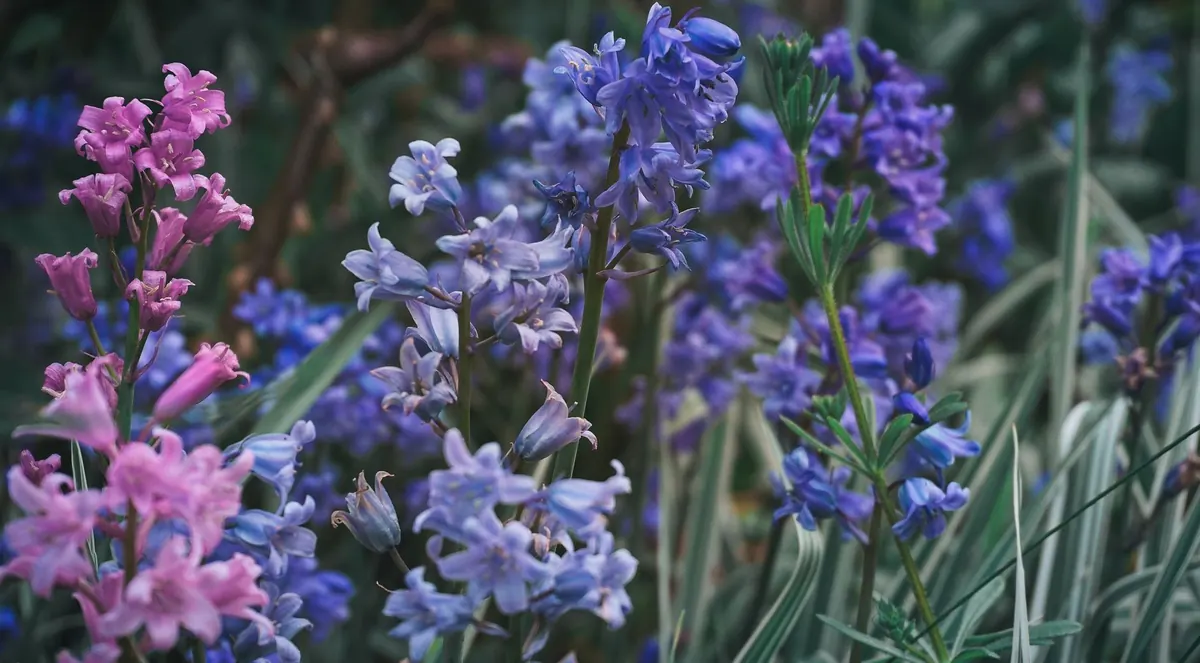
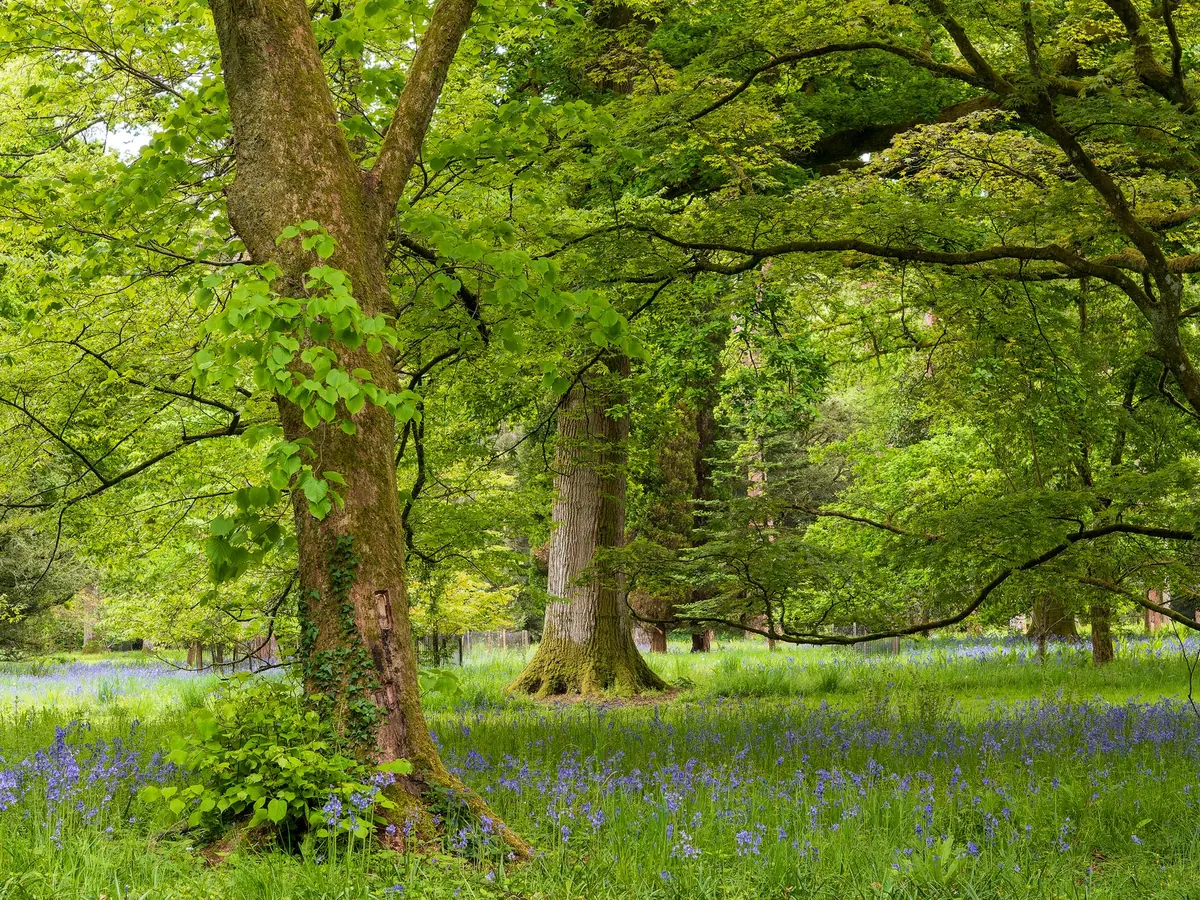
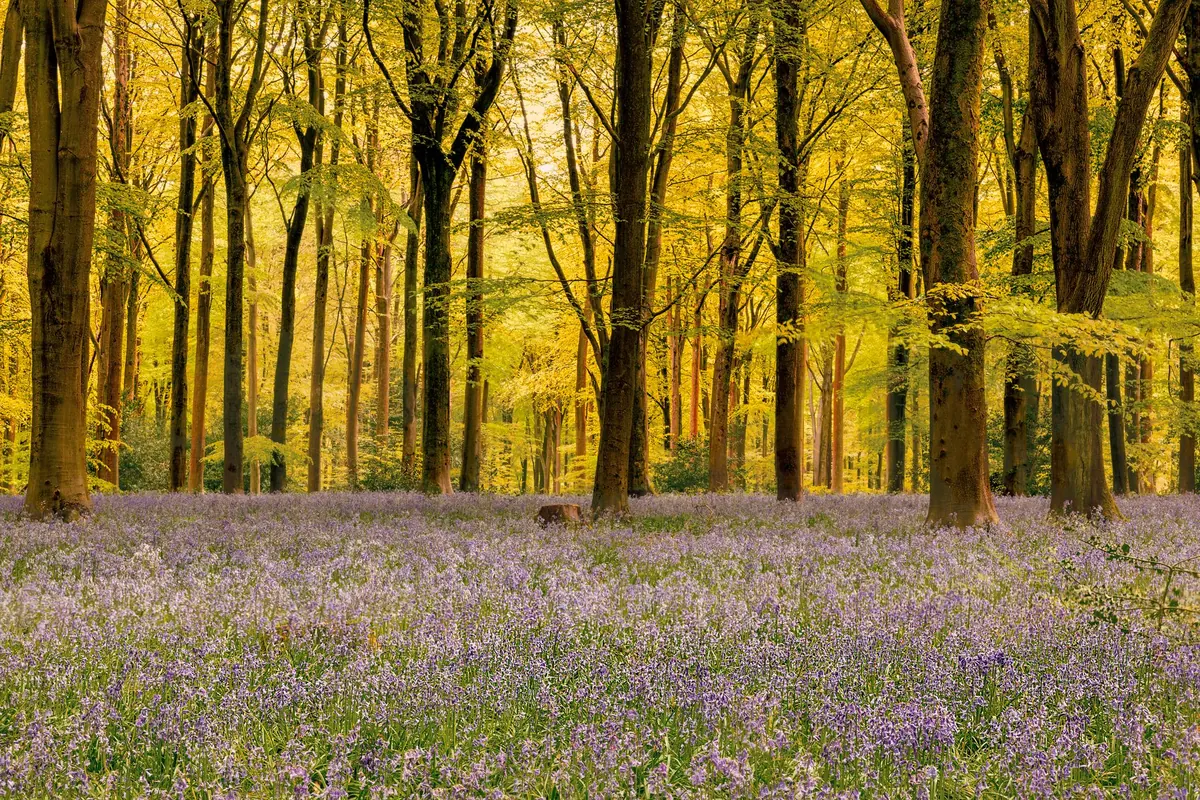
May is the woodland's big moment. Bluebells turn the floor into a blue haze, especially in the first half of the month. Wild garlic flowers in white star clusters, and early purple orchids stand like little purple spires. Wood sorrel adds a delicate, clover-like note. As the canopy closes, the light changes to a soft green, and the wood feels like a cathedral.
This is a fine time for insects. Orange-tip butterflies patrol hedgerows and woodland edges, speckled woods dance in dappled sunlight, and damselflies hover near streams. Roe deer are often visible at dawn and dusk. By June, foxgloves rise tall in clearings, honeysuckle scents the air, and moths take over the night shift. Look for the day-flying burnet moth on grassland edges nearby.
July and August: The Quiet Green
High summer is the stillest time in the wood. Birdsong fades, and the dominant colours are green on green. But there is plenty to see if you slow down. Ferns unfurl their fronds, mosses glow on damp logs, and the first berries begin to colour — rowan, holly, and guelder rose. Tree seeds are forming: acorns, hazelnuts, and ash keys.
Insects are at their peak. Dragonflies and damselflies hawk along rides and streams, hoverflies hover in shafts of light, and spiders spin webs across paths. Listen for the soft call of juvenile birds, and watch for deer flies and butterflies. A few fungi appear, such as the chanterelle, but the main season is still ahead. This is a good month to look for leaf mines and galls — tiny stories written on leaves.
September and October: Fungi and Falling Leaves
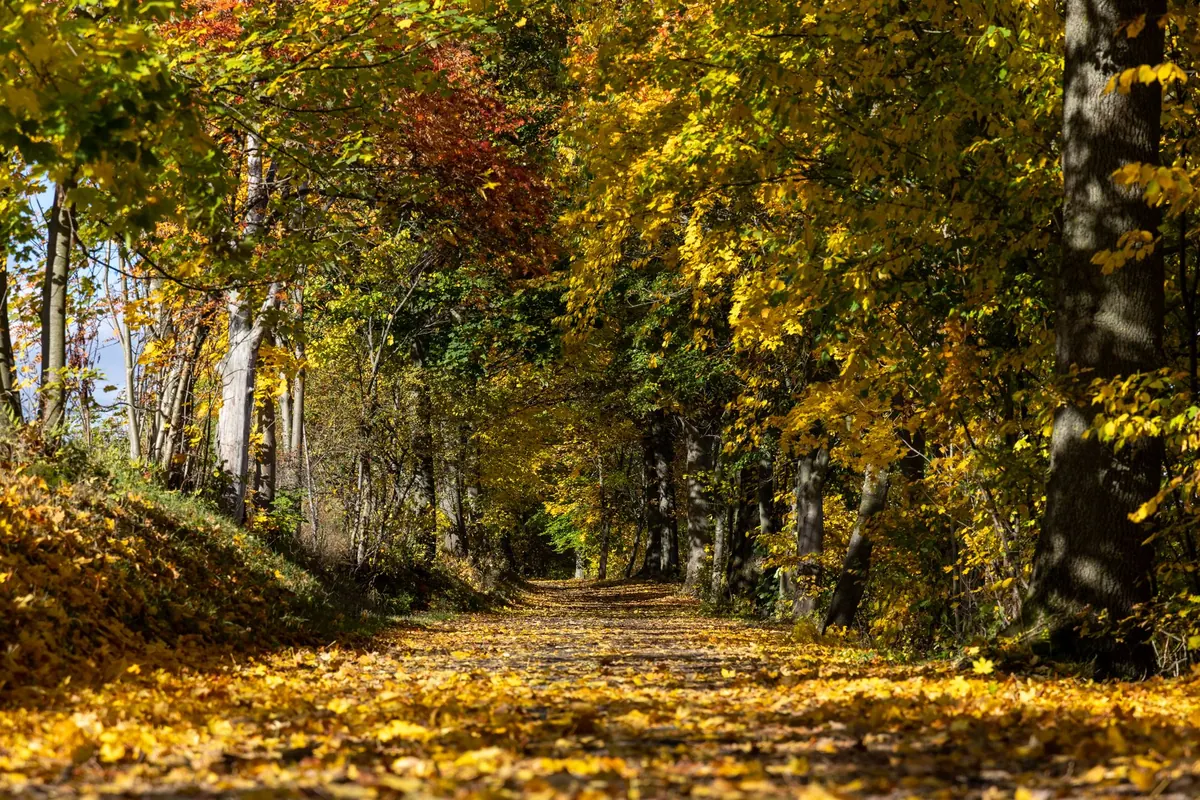
Autumn is the woodland's second spring. Fungi push up everywhere: fly agaric with its red cap and white spots, puffballs like round cushions, and bracket fungi on dead wood. Remember that foraging requires real expertise; never eat a mushroom unless you are absolutely certain, and check local rules before picking anything. Leaves turn — beech to copper, oak to russet, birch to gold. Nuts and seeds are ripe: acorns, hazelnuts, and sweet chestnuts.
Deer enter the rut, and their bellowing carries through the trees. This is also the great migration season. Redwings and fieldfares arrive from Scandinavia, and you may hear the thin, high calls of winter thrushes overhead. On dewy mornings, spiders' webs hang like silver thread across every gap.
November and December: The Skeleton and the Evergreens
As the last leaves fall, the wood reveals its bones again. You can see the shapes of trees, the courses of old coppice stools, and the intricate patterns of lichen on bark. Mosses and ferns come into their own in the damp, and the woodland feels quiet but alive. Holly and ivy provide berries for birds, and their deep green stands out against grey trunks.
Winter birds arrive in earnest. Look for redwings and fieldfares stripping berries, and listen for the low, croaking call of woodcock in the twilight. Woodpeckers drum on dead branches, and owls call at dusk. After rain or snow, tracks tell the story of nighttime visitors. Look for woodpecker holes, owl pellets, and the scattered remains of nuts left by squirrels and mice.
Practical Tips for a Rewarding Walk
The best woodland walks are slow ones. Go a little way, then stop. Look up at the canopy, down at the leaf litter, and closely at the bark. A hand lens opens a new world on moss, lichen, and fungi. Keep a notebook or use your phone to record what you see and where — over a year, you will build your own map of the wood's moods.
A few things make a real difference:
- Wear sturdy boots — woodland paths are often muddy, slippery, or uneven.
- Take a field guide or a good identification app, but treat it as a starting point, not a final answer.
- Stay on paths where possible, especially in spring when ground flora is fragile and birds are nesting.
- Keep dogs under control and away from wildlife, particularly in the breeding season.
- Leave no trace — take everything home, and never pick flowers or fungi unless you are certain it is legal and sustainable.
If you plan to forage, remember that some fungi and plants are poisonous, and identification must be certain. When in doubt, leave it alone and enjoy it where it grows. For anything you intend to eat, seek advice from a qualified expert or your local mycological group before consuming.
Finally, go often. The same path in January and July will feel like two different woods. That is the quiet magic of a seasonal woodland walk.
Photo: Toni Seyfert / Pexels