How to Naturalize a Lawn with Spring Wildflowers
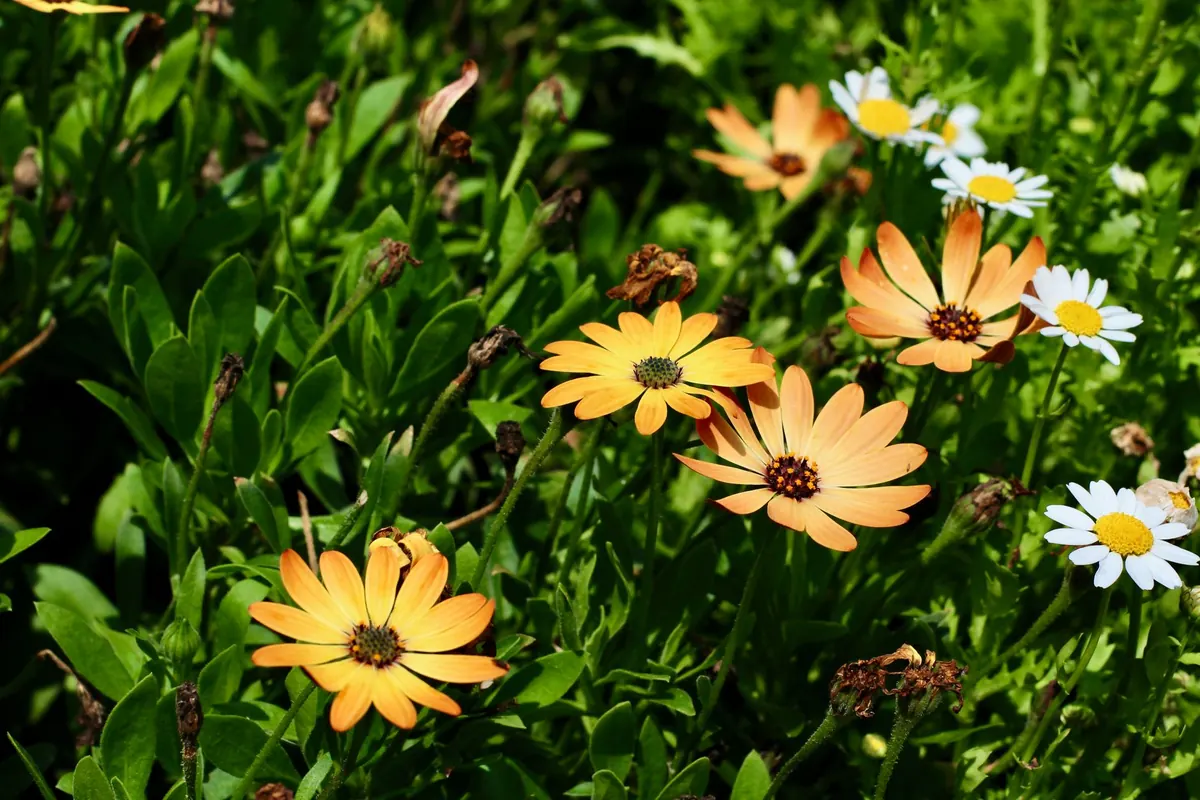
A lawn can be many things at once. In February it is a flat green rug. By March it holds a scatter of crocus and the first snowdrops; in April, a haze of blue muscari with daisies opening in the gaps between them. Naturalizing a lawn means letting those moments happen on purpose — planting bulbs and low-growing wildflowers into the grass you already have, then adjusting how you mow so they come back without any help from you. Most of the work happens in a few autumn weekends. After that, the lawn becomes the sort of thing that improves the less you interfere with it.
What Naturalizing Really Means
There is a difference between a wildflower meadow and a naturalized lawn, and it helps to know which one you are aiming for. A meadow is cut once or twice a year, grows knee-high by June, and looks best when it is left entirely alone. A naturalized lawn is still a lawn. You still walk on it, still kick a ball across it, still mow it — just less often, and higher, and with a few deliberate exceptions.
The system works in two layers. The first is bulbs, which spend most of the year asleep underground and push up when the grass is barely growing. The second is low-growing perennials that can survive the blades: small things that flower below the mower height or recover quickly after a cut. Neither layer asks for feeding, watering, or spraying. In fact, the less rich your soil, the better both of them do, because coarse grass loses its advantage when fertility is low.
The Bulbs Do Most of the Work
Spring bulbs are the easiest win, because you plant them once in autumn and they simply come back. Choose species that reliably naturalize rather than big showy hybrids bred for one season in a pot.
- Snowdrops — first to flower, happy in light shade beneath deciduous trees. Buy them "in the green" in spring if you can; they settle faster than dry bulbs.
- Winter aconite — a low pool of yellow in February. The tubers dry out badly, so soak them overnight and plant straight away.
- Species crocus — Crocus tommasinianus in particular spreads itself around a lawn within a few years.
- Squill and glory-of-the-snow — blue, tough, and completely indifferent to being mown once they have finished.
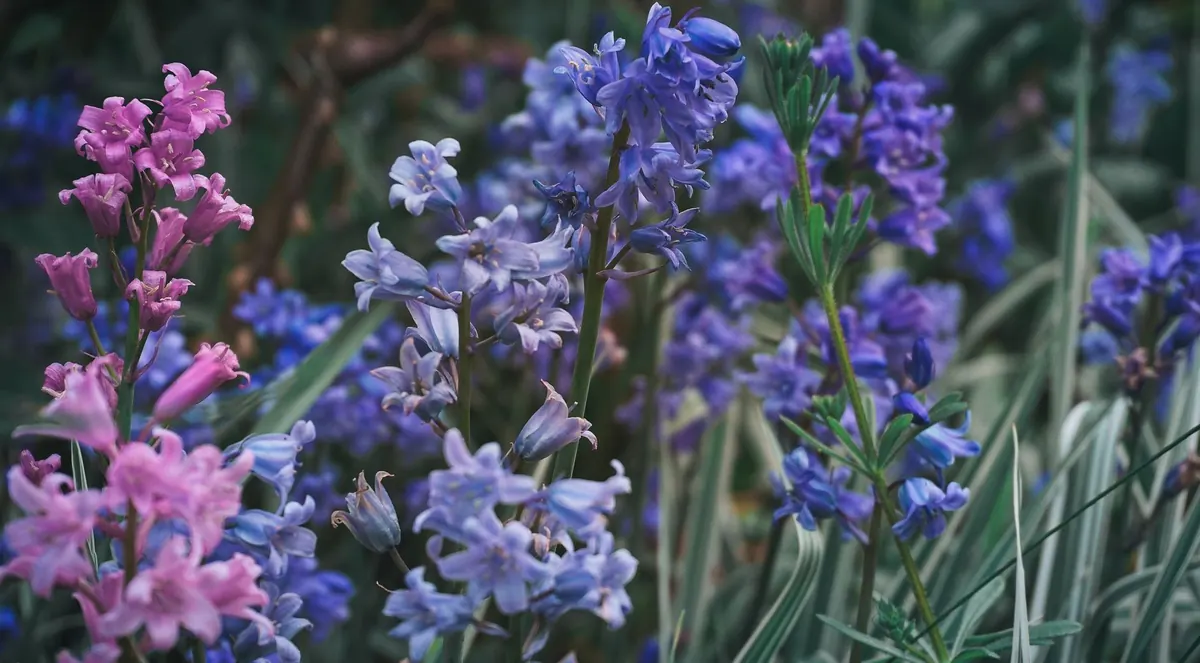
- Grape hyacinth — Muscari, the classic April blue. Plant it thickly; a thin line of it looks like a mistake.
- Small daffodils — species and miniature cultivars, not the tall exhibition types that flop in long grass.
- Snake's-head fritillary — for a spot that stays damp through winter.
Plant in autumn, from September into November, with the pointed end up and the bulb buried about two to three times its own height. In grass, a bulb planter or a lifted flap of turf makes the job quick. Resist spacing them out like onions in a bed. Tip a handful from a bucket and plant them where they land, in loose drifts of ten to twenty bulbs, so the flowers read as patches of colour rather than a polka-dot pattern.
The one rule that matters: never cut the leaves while they are still green. That foliage is feeding next year's flower. Give it roughly six weeks after flowering, until it yellows and flops, then mow as normal.
Low-Growing Plants for the Grass Layer
Once the bulbs have gone over, the lawn needs something to carry it through summer. Look for plants that flower low and tolerate occasional cutting: selfheal with its small purple heads, common daisy, bird's-foot trefoil, white clover, germander speedwell, bugle in the shadier corners, and violets where the ground stays a little damp. Primroses and cowslips will hold their own along a hedge or under a fence where the mower does not reach.
If you want to tip the balance further towards wildflowers, yellow rattle is the classic tool. It is a small annual that parasitises grass roots and steadily weakens the coarse grasses around it. Sow fresh seed in autumn onto scarified ground, and give it a year or two to establish. It suits a patch that is being left longer; it is not much use in grass that is cut every fortnight.
Converting the Lawn, Step by Step
- Watch the lawn for a year, or at least a season. Note where water sits after rain, where the shade falls, and which routes you actually walk. This tells you where bulbs will rot and where a mown path needs to stay.
- Stop feeding it. No spring fertiliser, no weed-and-feed, no moss killer. Rich grass swamps everything you are trying to grow.
- Raise the mower. Move from a close cut to roughly 5–7 cm and keep it there. Longer grass shades out weeds, holds moisture, and hides the scruffy leaves of plants that have just been cut.
- Open up the sward. Rake or scarify patches in early autumn to expose some soil. Seeds need contact with the ground, not a mattress of thatch.
- Plant bulbs in drifts through the autumn, then sow wildflower seed into the scarified patches.
- Collect the clippings for the first year or two. Removing them slowly lowers fertility in your favour. After that, letting them drop is usually fine.
The Mowing Calendar
Timing is the whole skill here, and it changes month by month.
Late winter to mid-spring
Stop mowing when the first bulb tips appear. If the lawn looks untidy, mow narrow paths through it at a high setting, or mow around the drifts and leave them alone. This is the period when the wildflowers are doing their work.
Late spring
Once the bulb foliage has yellowed — usually late May into June — cut the whole thing back, going gently at first so you do not scalp the crowns of young perennials. Rake off the cuttings if the grass is thick.
Summer
Mow every two to three weeks at 5–7 cm. If a dry spell arrives, cut less often and higher. The lawn will look patchy and uneven; that is the point, not a problem.
Autumn and winter
One or two more cuts, then let it stand longer into winter. Never mow frosty or waterlogged ground, which tears the grass and compacts the soil.
Things That Go Wrong
The commonest mistake is cutting too early out of tidiness, which kills the bulb display within two seasons. The second is planting into a hollow that holds water all winter — bulbs rot there, while the same bulbs on a slight slope do fine. Heavy clay is worth improving with a handful of grit in each planting hole. Big hybrid tulips rarely naturalize in grass; if you want tulips, choose species types and treat them as a bonus rather than a foundation. And do not dig the lawn over to start again. The grass you already have is the frame for everything else.
Start With One Patch
You do not need to convert the whole lawn. Pick a corner that is awkward to mow, or the strip along a fence, and give that area the treatment first: bulbs in autumn, a little seed, a change of mowing habit. Watch it for a spring. If the crocus come back and the selfheal spreads, take another few square metres next year. That piecemeal approach is how most good wildflower lawns are made — not in a single weekend of digging, but in a slow drift of small decisions, one spring at a time.
Photo: Anderson Wei / Pexels