The Best Time to See Bluebells in the UK: A Regional Guide
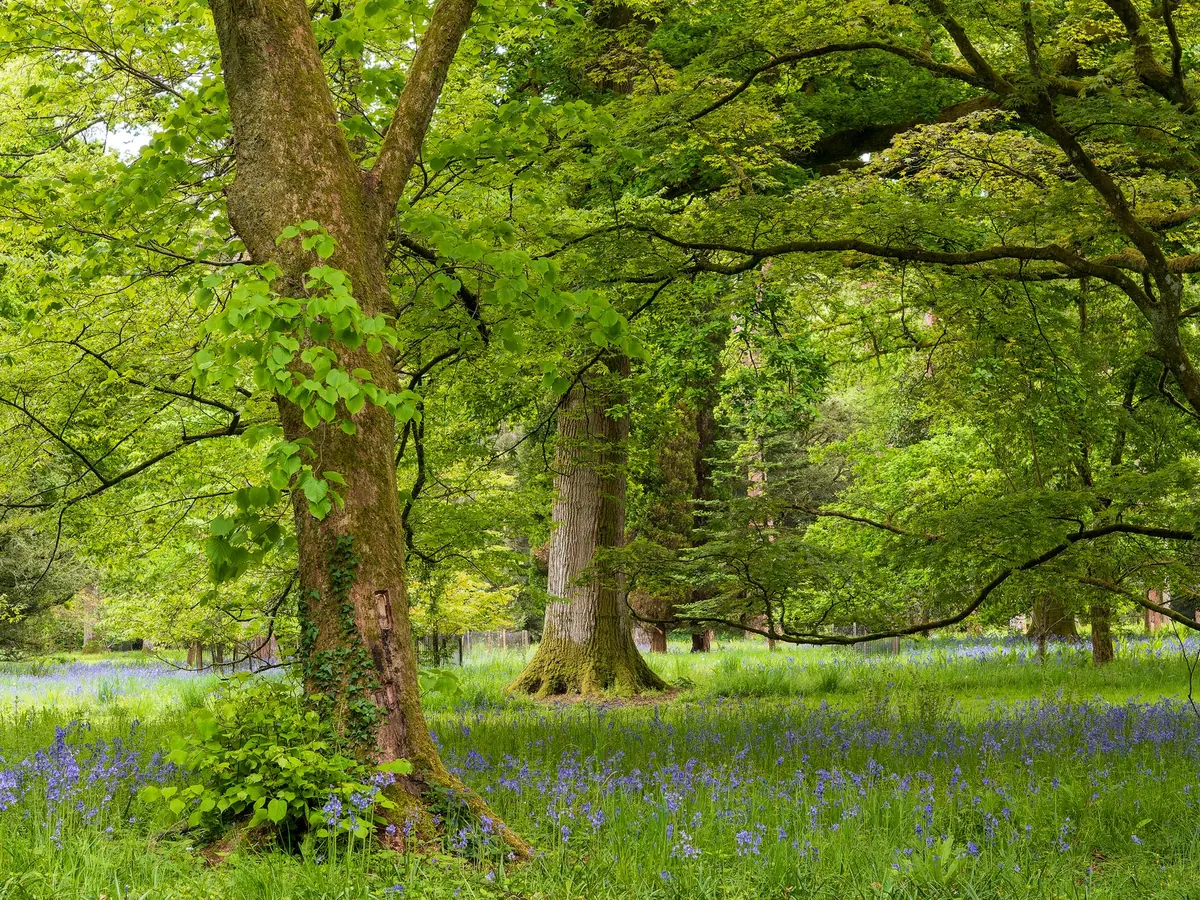
Bluebells keep their own calendar. The same species that turns a Cornish valley blue in the second week of April may hold back until the middle of May in an Aberdeenshire wood, and one cold spring can push the whole country back a fortnight. If you are planning a visit — or booking a day off for one — timing is most of the battle. What follows is the rough order of play across the UK, plus the local quirks that decide whether a particular wood is at its peak this weekend or next.
How the Season Moves North
Bluebell season in the UK runs, broadly, from late March to early June. The wave starts in the mild, sheltered south west, rolls through the southern counties in the second half of April, reaches the Midlands and Wales, then climbs into northern England and Scotland through May. The whole journey takes about six weeks from first flower to last.
In any single wood the display lasts roughly three to four weeks, with the finest ten days somewhere in the middle. Warm, still weather brings it on quickly and finishes it quickly; a cold easterly can hold a wood at green bud for a fortnight. Treat the dates below as windows rather than appointments.
Two things complicate the map. Altitude matters as much as latitude: a wood at 300 metres in the Peak District behaves like one several hundred miles further north, and an exposed hillside can trail a sheltered valley a mile away by a full week. Aspect matters too, so a south-facing slope will always be ahead of a north-facing one on the same estate. If you are choosing between two woods on the same day, head for the lower, warmer, more sheltered one.
The South West and the South Coast: First to Flower
Cornwall, the Isles of Scilly, south Devon and the sheltered valleys of Somerset and Dorset lead the country. Coastal and south-facing woods can show colour in the last days of March, and mid-April is usually the reliable moment. Lanhydrock near Bodmin, the wooded flanks of the Tamar Valley and the lanes around Dartmoor's southern edge are good places to start.
By the time Cornish bluebells are going over, the Midlands are only just beginning. That gap is your insurance policy: if you miss one region, follow the season north instead of waiting a year.
The South East, London and the Home Counties
Kent, Sussex, Hampshire, Surrey, Berkshire, Buckinghamshire and Hertfordshire typically flower from mid-April, with the peak falling in the last week of April or the first days of May. Micheldever Wood in Hampshire, King's Wood near Challock in Kent, the Chilterns around Ashridge and the Arlington Bluebell Walk in East Sussex are all well known for good reason.
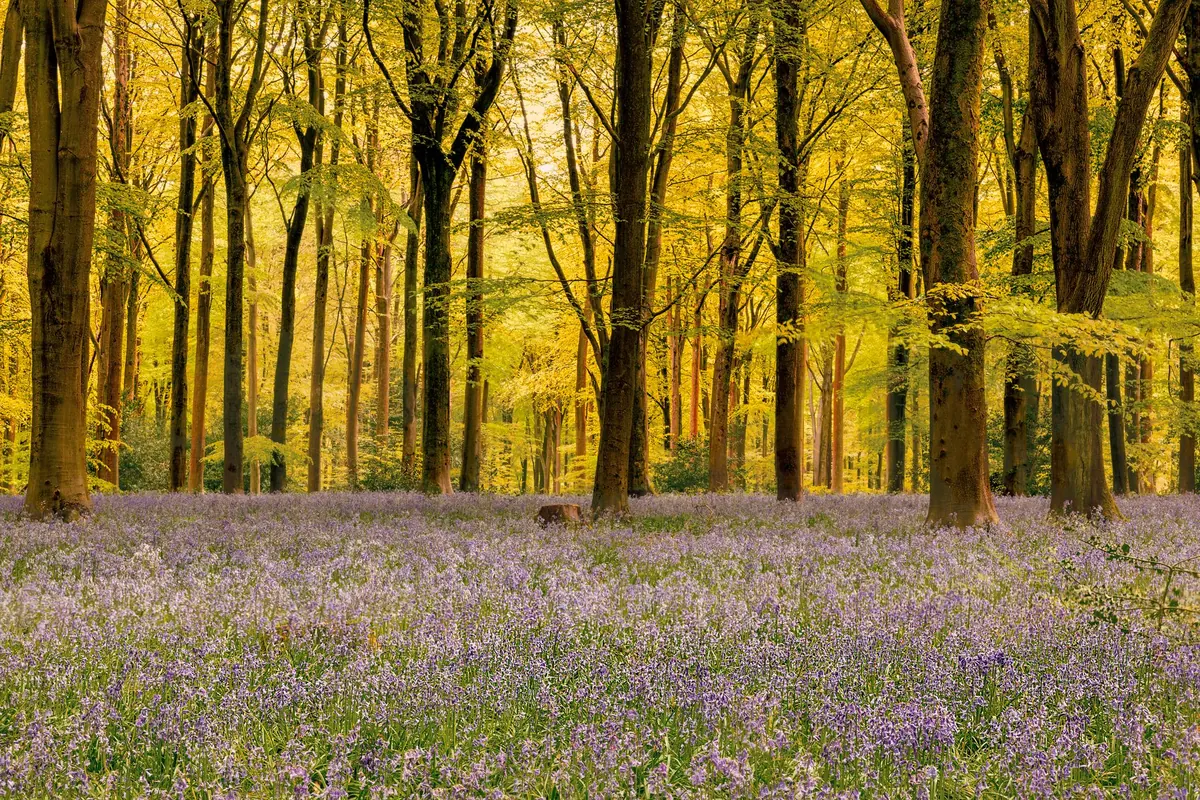
Many of these are beech woods, and that matters. Beech leafs out fast and shuts the canopy early, so the bluebells flower quickly and finish quickly. Miss the ten-day window in a beech wood and you will find nothing but shade. Oak and ash woods, which leaf later, are more forgiving — the display lasts longer and the colour holds while the canopy is still open.
Londoners need not travel far. Woods within the M25 and along the North Downs, such as those around Westerham and the chalk slopes of Surrey, are often at their best in the last week of April, before the beech closes over.
East Anglia, the Midlands and Wales
Expect late April into mid-May here. Foxley Wood in Norfolk, Bradfield Woods in Suffolk, the woods around Chirk Castle and the Wye Valley all sit a few days behind the south east, thanks to cooler spring air and thinner soils. On the heavier clay soils of the Midlands, bluebells tend to arrive a little later but linger a little longer, and the woods are often wetter underfoot well into May.
Upland woods in mid-Wales and the Marches trail the lowland ones by a week or more, so a late-May walk in Radnorshire can still deliver. Ancient woodland on these western hills often holds the densest carpets in Britain, simply because the sites have never been ploughed.
Northern England, Scotland and Northern Ireland
In Yorkshire, Lancashire, Cumbria and Northumberland, the season usually runs from the last days of April through to the end of May, with the reliable peak falling between the 10th and the 25th. Woods on the limestone of the Yorkshire Dales and the Eden Valley are excellent; the Lake District's lower valleys are often a week ahead of the fells above them.
Scotland pushes the season later still. Lowland woods in Dumfries and Galloway and around Loch Lomond may peak in the third week of May, while Highland and Aberdeenshire woods can hold their colour into the first days of June. Some northerly sites are at their best when the south has long since gone green — a genuine second chance, and often a quieter one.
In Northern Ireland, the best displays tend to fall in the first half of May, with county Antrim and county Down woodlands, and the glens of Antrim in particular, offering dependable shows. Ireland as a whole warms more slowly than England thanks to the surrounding Atlantic, so the west coast lags the east.
Reading the Signs: How to Judge a Wood Before You Go
You do not need to drive there to find out. A few indirect signals will tell you a great deal.
- Look at the trees. If the beech or oak canopy is already closing, the bluebells underneath are on their way out. If the buds are still tight, wait a week.
- Watch the weather records. A mild, dry March brings the season forward; a cold, wet one delays it. An unusually warm fortnight will accelerate a wood noticeably.
- Check local social media and wildlife trust pages. Reserve wardens and county wildlife trusts post flowering updates, and they are far more accurate than any national calendar.
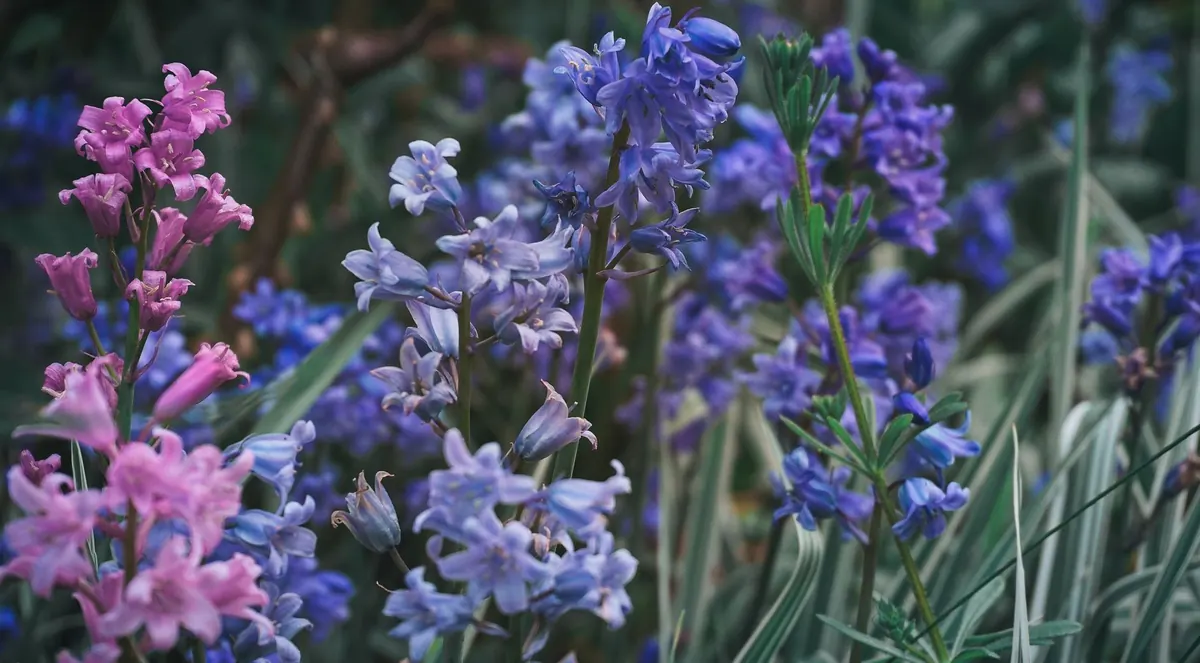
- Know what you are looking at. Native bluebells (Hyacinthoides non-scripta) droop to one side, carry deep violet-blue flowers on a nodding stem and have narrow leaves. The invasive Spanish bluebell stands upright, flowers all round the stem, is paler blue and has broad, glossy leaves. Native displays are the ones worth chasing.
Getting the Most From a Visit
A little planning turns a pleasant walk into a memorable one.
- Go early or go late. The scent is strongest in the morning and again in the evening, and the light is softer for photographs. Midday sun flattens the colour.
- Pick a still day after rain. Bluebells look their best when the air is damp and quiet; wind blurs both the scent and the shot.
- Stay on the path. Bluebell leaves take years to recover from trampling, and the bulbs sit surprisingly close to the surface. A photograph is not worth a decade of damage.
- Leave the dog on a lead in sensitive woods and keep to marked routes during peak season, when ground-nesting birds are also active.
- Ask locally. The best displays are often small, unlisted and known only to the parish — a village pub is a better guide than any app.
Above all, be flexible. The bluebell season is a moving target, and the people who see the finest carpets are the ones willing to shift their plans by a week, or drive an hour further north, when the reports suggest the moment has arrived. Follow the wave rather than the date, and the UK's bluebell woods will rarely disappoint.
Photo: Bob Jenkin / Pexels