From Dormant to Bloom: Understanding the Bluebell Life Cycle
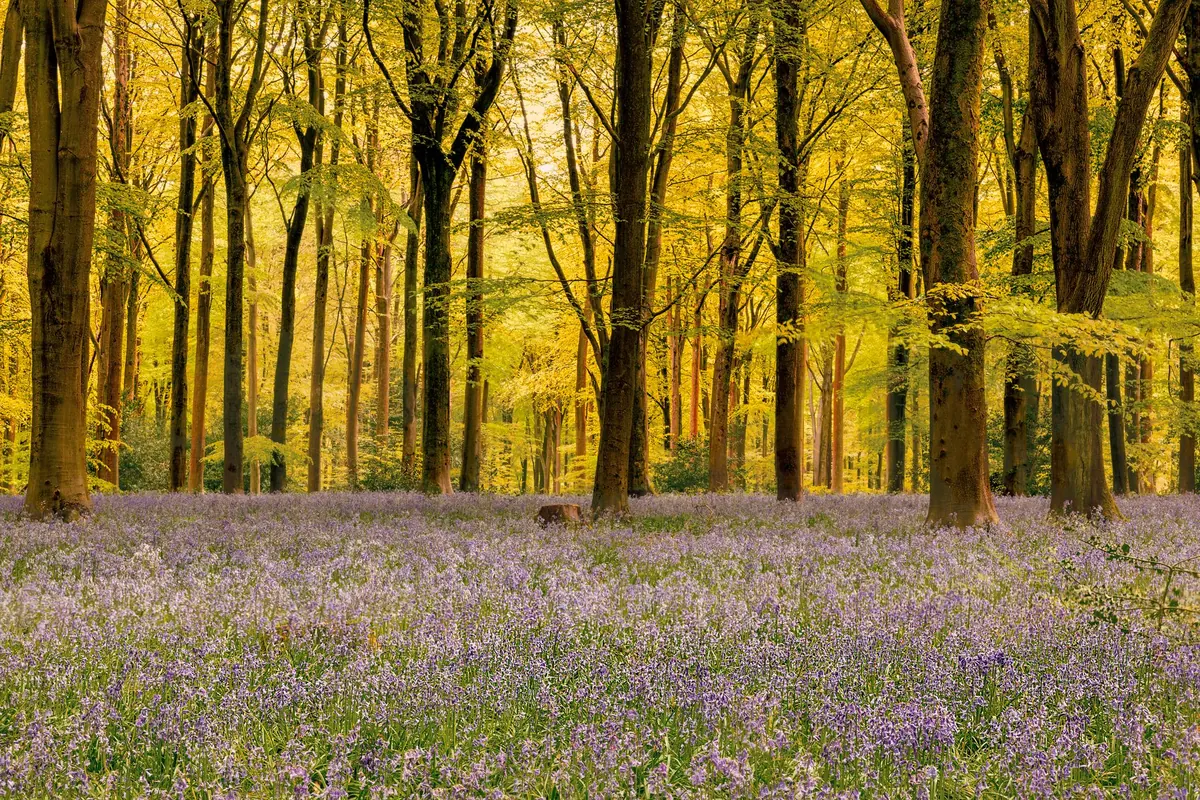
A bluebell wood in late May looks like the end of the story: a blue haze, a low hum of bees, then silence as the leaves yellow and vanish. Flowering, though, is only one scene. Under the soil the bulb keeps working through the whole calendar, and the plant you admire for three weeks in spring has been preparing for it since the previous summer. Knowing that rhythm makes bluebells far easier to grow — and tells you clearly when to leave them alone.
Dormancy: The Bulb's Quiet Summer
By early to midsummer the foliage has collapsed and the woodland floor closes over it. The bulb is not asleep in any dramatic sense, but it is dormant: nothing visible above ground, no active roots, very little happening. Inside, next spring's shoot and flower bud are already being laid down in miniature.
Bluebell bulbs renew themselves each year. The food stored in the old scales is used to build a fresh bulb at the base of the current shoot, and small offset bulblets often form alongside it. That is how a single bulb becomes a clump, and how a clump becomes a drift.
Summer is also when bulbs are most easily lost. A bluebell lifted in July has no roots to hold it and no leaves to feed it, so it can shrivel before the autumn rain arrives. If you must move dormant bulbs, do it as late as you dare and keep them cool and damp in the meantime.
Why the timing suits woodland
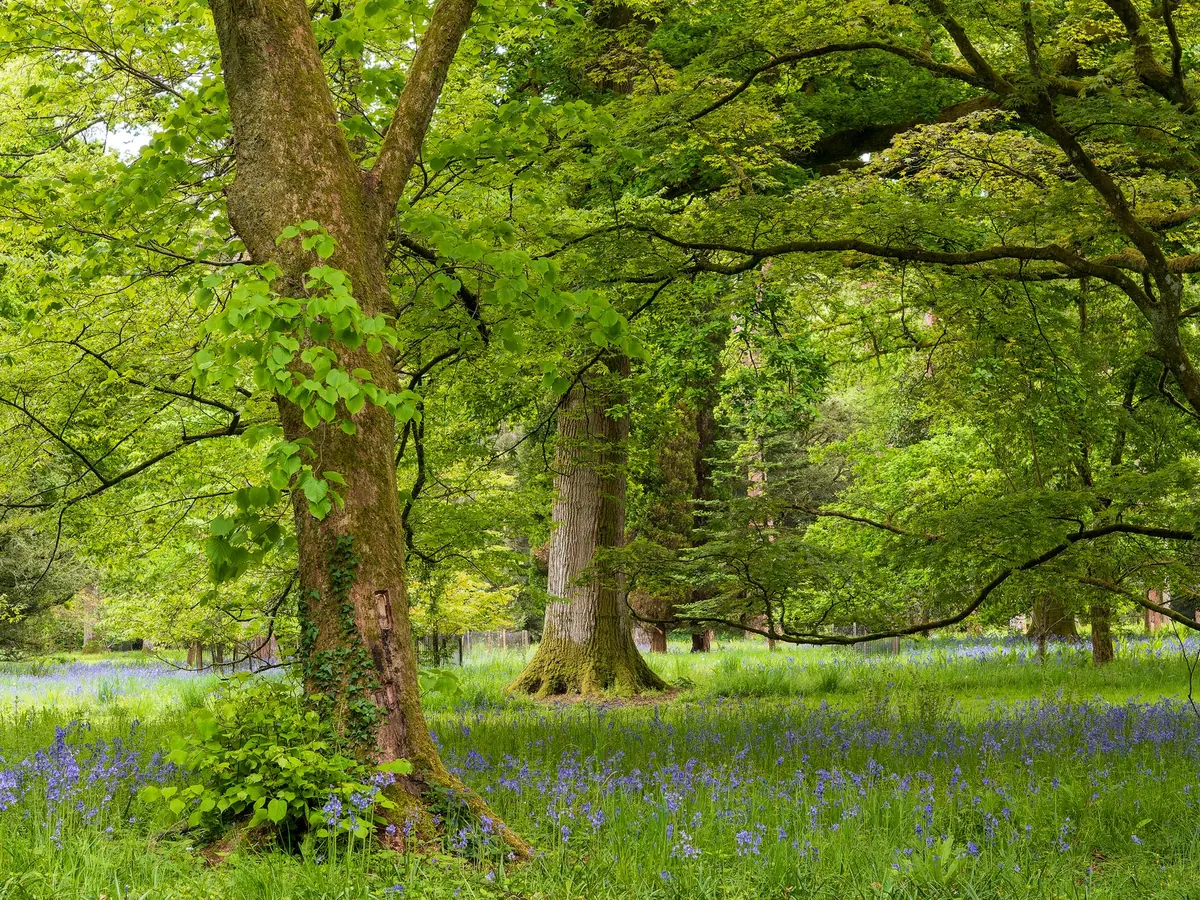
Under deciduous trees, spring is the bright window. Sunlight reaches the ground before the canopy closes, and bluebells use every hour of it. Once the trees leaf out there is little light to be had, so the plant retreats underground and waits. The dormancy is not laziness; it is a fit to a very specific kind of shade.
Autumn: Roots Before Shoots
As the soil cools and rain returns, the bulb wakes below the surface. Roots push out first, often from late summer into autumn, and a new shoot apex forms. In mild, sheltered gardens you may see a small pointed tip break the soil by midwinter; in colder spots it waits until February or March.
This is the best time to plant bought bulbs: early to mid-autumn, while the soil is still warm enough for roots to establish. Set them about 10cm deep — roughly three times the bulb's own height — and 10–15cm apart in humus-rich soil that drains but does not dry out. A handful of leaf mould in the planting hole does more good than any fertiliser.
Late Winter to Early Spring: The Leaves Do the Work
Strap-like leaves unfurl and open flat to the light. For six to eight weeks they are the engine of the whole cycle, turning sunlight into the sugars that will fill the new bulb and set the flower bud for next year.
This is the stage gardeners most often ruin. Cutting or strimming bluebell leaves straight after flowering removes the plant's only means of storing energy. Leave them until they yellow and flop of their own accord, usually by late June or early July, and only then tidy them away.
Spring: Flowering and Pollination
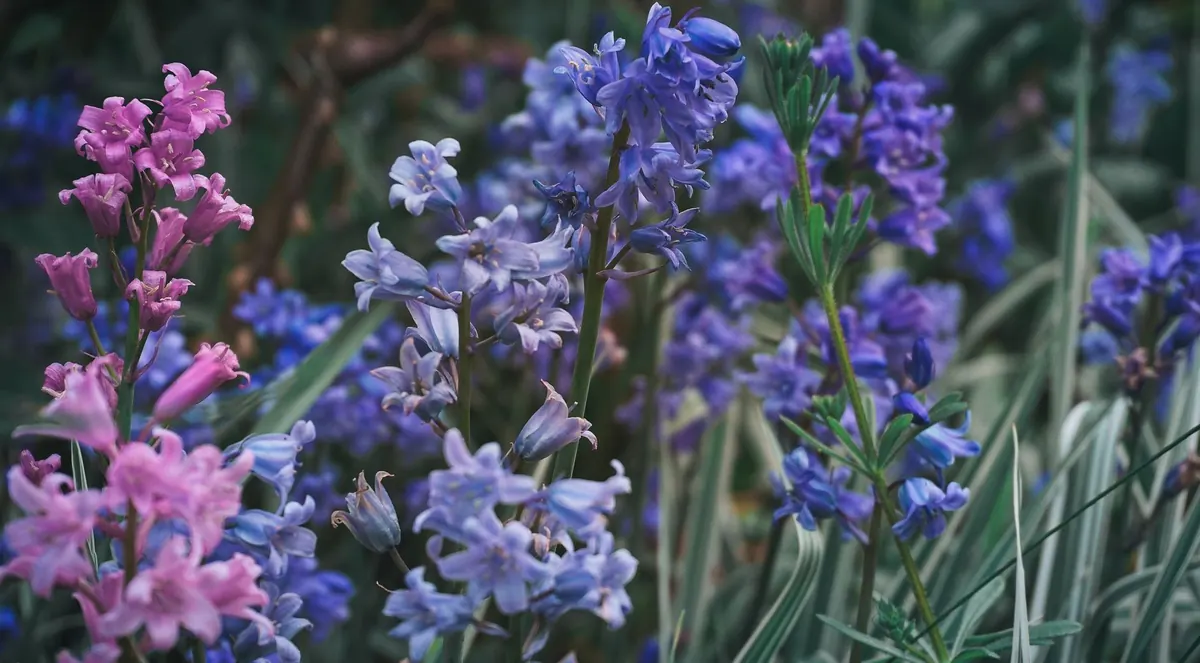
Flowering generally runs from mid-April to late May, later in the north, at altitude and in deeper shade. A native bluebell spike nods to one side, carries cream-coloured anthers and smells sweetly of starch and honey. A Spanish bluebell stands more upright, holds flowers all round the stem, has blue anthers and barely any scent. Where the two grow together they cross, and the resulting hybrids are common in gardens.
Bumblebees, solitary bees and hoverflies do the pollinating. Individual flowers last only a few days; a colony in good condition gives you three or four weeks of colour. Cool, damp weather stretches the display, while a hot, dry spring can cut it short.
Seed Set and Dispersal
Once pollinated, the petals drop and green capsules swell in their place. Over several weeks they turn papery and brown, each holding a handful of dark seeds. Every seed carries a small oily attachment, and ants do the planting: they carry seeds to their nests, eat the oil, and leave the seed underground in a place that is dark, damp and safe.
That partnership explains the spread of bluebells — slowly outward from a colony, and occasionally further along a path or a hedge bank. It also explains why seed heads are worth leaving in place. A tidy garden that removes every capsule loses the next generation.
From seed to first flower: a long apprenticeship
A germinated seed forms a bulb no bigger than a grain of rice and spends its first years as a single thin leaf, easily mistaken for grass or a weed. It builds size slowly and typically takes four to six years to reach flowering strength. So when a patch of "grass" appears under your bluebells, it may well be bluebells in waiting. Mark the spot and leave it alone.
Sow fresh seed as soon as it is ripe, in a pot of leaf-mould-rich compost kept outdoors, and be patient: germination can take more than one winter. Dried, stored seed is far less reliable.
Putting the Cycle to Work in Your Garden
Almost every practical decision about bluebells follows from the timetable above:
- Plant in early autumn if you have dry bulbs, so roots can form before winter.
- Plant "in the green" if you can — lifted and moved just after flowering while the leaves are still green, bluebells settle far more reliably than dry bulbs.
- Do not cut foliage until it has yellowed naturally, usually six to eight weeks after the last flower.
- Leave seed heads unless you have a specific reason to remove them, and let the ants do the sowing.
- Never dig bluebells from the wild. They are protected in Britain, and a dug plant rarely survives anyway. Buy from a supplier selling native stock grown in cultivation.
- Check the anthers when buying or dividing. Cream anthers mean native bluebell; blue anthers usually mean Spanish or a hybrid.
Do that and you are not simply keeping bluebells alive. You are giving the cycle room to run — bulb, leaf, flower, seed, and a slow new generation underneath.
Photo: Suzy Hazelwood / Pexels