Shade-Loving Perennials for Woodland Gardens
Woodland shade is rarely one thing. Ten feet from a maple trunk you may have soil that stays cool and damp all summer; directly beneath the canopy, a dry crust laced with roots that drink every drop before a perennial ever sees it. Add a few hours of dappled morning light and you have a third environment altogether. The plants below have earned their place in all three — not through pampering, but by tolerating root competition, uneven moisture and modest light. Most are long-lived, spread politely, and look considerably better in their third year than their first.
Read Your Shade Before You Buy Anything
Dig a trowel-deep hole in the spot you have in mind, water it, and see how long the soil stays dark. That single test tells you more than a plant label ever will. Dry shade is the hard case: rain is intercepted by leaves, and tree roots strip the rest. Dappled light, broken into moving patches by branches, is the easiest condition to plant into. Deep, unbroken shade under evergreens is the most limited — expect fewer flowers and lean on foliage.
Also note when the shade arrives. Under deciduous trees, spring is bright and wet before the canopy closes, which is exactly why so many woodland perennials do their growing in April and May and quietly endure the rest of the year.
The Hardest Assignment: Dry Shade Under Mature Trees
These are the plants worth starting with where the soil is rooty, dusty and shaded for most of the day.
Bigroot geranium (Geranium macrorrhizum) is close to indestructible. Scented scalloped leaves, magenta or white flowers in late spring, and thick rhizomes that knit into a mat few weeds push through. The foliage reddens in autumn. Cut it back hard in late winter if it looks tired.
Barrenwort (Epimedium) sends wiry sprays of small spurred flowers in April above heart-shaped leaves that turn bronze and red later. It shrugs at dry soil once established. Shearing the old foliage to the ground in late winter makes room for a clean new flush.
Hellebores flower from midwinter into spring, hold evergreen leaves through the year and seed themselves into gaps without becoming a nuisance. Their only demand is decent drainage. Trim damaged foliage in late winter so the flowers are not hidden.
Cyclamen hederifolium is the sleeper of dry shade. Pink flowers appear in early autumn on bare corms, followed by marbled silver-and-green leaves that carry the winter. The tubers rest in summer, which suits a spot that dries out completely.
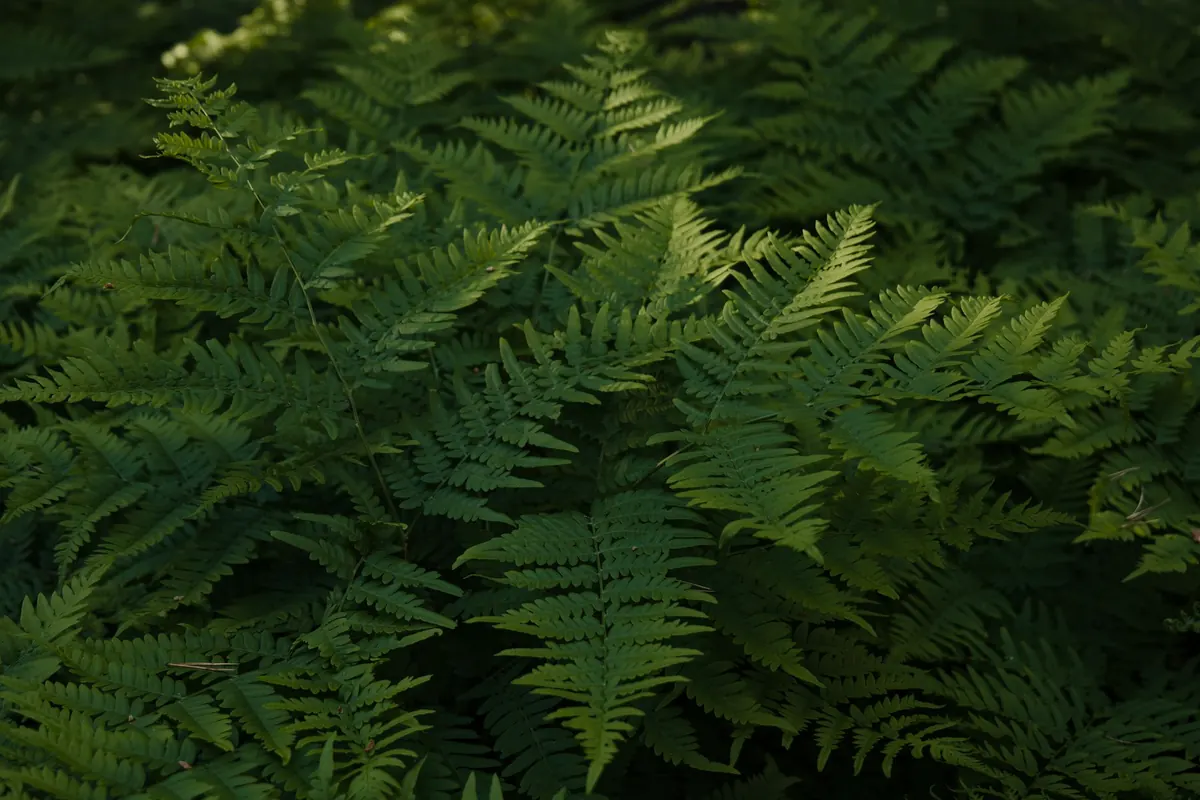
Male fern (Dryopteris filix-mas) and its relatives cope with drier shade better than most ferns, giving the architectural shuttlecocks that make a woodland planting read as deliberate rather than accidental. Water them through their first summer and they will look after themselves.
Pachysandra and deadnettle make useful filler at the front, though both spread with enthusiasm. Give them a boundary you can live with, or a hard edge such as a path.
Where Light Dapples Through
Once you have a few hours of filtered sun, the palette widens. Siberian bugloss (Brunnera macrophylla) offers forget-me-not blue sprays in spring and, in the named forms, leaves washed with silver that brighten a dim corner all season. Lungwort (Pulmonaria) flowers early in blue, pink or white above spotted foliage; it sulks in dry soil and may mildew, so keep it where moisture lingers.
Foamflower (Tiarella) spreads by runners into soft colonies with frothy white spikes in late spring. Coral bells (Heuchera) hold colour through winter but scorch in hot, dry shade — site them where the soil stays cooler. Solomon's seal (Polygonatum) arches gracefully over lower plants, and baneberry (Actaea) brings late summer spikes followed by glossy berries.
Groundcovers That Hold the Planting Together
Woodland gardens look settled or scruffy depending on what happens at ground level. These are reliable, and none need much from you:
- Wild ginger (Asarum canadense) — bold kidney-shaped leaves that hide bare soil in deep shade; spreads slowly by rhizome.
- Sweet woodruff (Galium odoratum) — whorled foliage and white spring stars; dried leaves smell of hay. Best in soil that does not bake.
- Barren strawberry (Waldsteinia ternata) — yellow flowers in spring, strawberry-like leaves, and a tidy, semi-evergreen carpet that edges neatly.
- Sedges (Carex) — grassy texture where ferns are too large; choose species suited to dry shade, such as Carex morrowii forms.
- Bugleweed (Ajuga reptans) — blue spikes over bronze leaves, excellent under shrubs, but keep it well away from lawns.
Designing With Layers and Succession
Think in three heights. At the back, put Actaea, ferns and Solomon's seal; in the middle, hellebores, epimedium and hostas; at the front, tiarella, cyclamen and the creeping groundcovers. Repeat plants in drifts of three or five rather than dotting one of everything, which reads as a collection rather than a garden.
Build in an evergreen backbone so the bed is not a brown smear from November to March — hellebore, epimedium, coral bells and sedge do that work. Then stretch the season: hellebores and snowdrops in winter, pulmonaria and epimedium in early spring, brunnera and tiarella in late spring, ferns and hosta foliage in summer, and Cyclamen hederifolium or Japanese anemone in autumn.
Planting and First-Year Care
- Plant in early autumn where you can. The soil is still warm, rain does the watering, and roots establish before winter.
- Prepare a pocket, not a pit. Loosen a planting hole a little wider than the rootball and fork the base, but do not dig deeply around established trees — you will sever feeding roots. Work between them.
- Set crowns at the level they grew at in the pot. Burying the crown of hellebores, tiarella or epimedium is a common way to lose them.
- Water through the first summer, even in shade, and not with a quick sprinkle — soak, then let the top few inches dry.
- Mulch with leaf mould or garden compost, about 5cm, keeping it clear of stems and crowns. Leave fallen leaves in place; they feed the soil and shelter overwintering plants.
- Freshen tired foliage in late winter: cut epimedium and hellebore leaves to the ground, tidy sedges by combing out dead blades with your fingers.
A Realistic Starter Plan
Choose five plants for your worst dry, rooty spot and five for your best dappled one, then plant in odd-numbered groups and walk away. Woodland perennials are slow to settle — the old saying about sleeping, creeping and leaping is close enough to the truth. Expect little in the first year, a real carpet by the third.
Feed sparingly. Rich annual dressings under mature trees can push soft growth and unsettle roots, so a light mulch is plenty once plants are established. And leave the natural litter where it falls: a woodland floor is built from years of it, and your hellebores, ferns and cyclamen will be happier for the company.
Photo: Lauri Poldre / Pexels