Bluebells vs Spanish Bluebells: How to Tell Them Apart
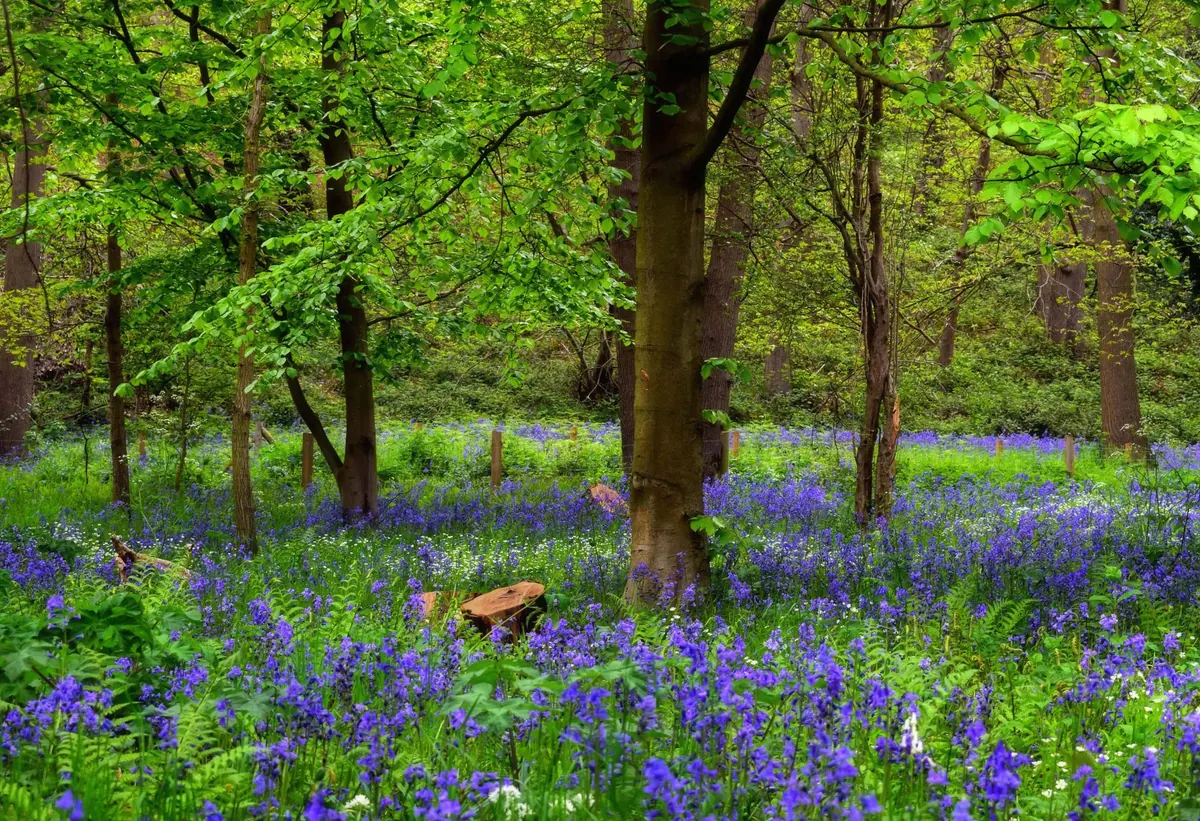
A wood full of bluebells is one of the best things spring does. It is also one of the easiest places to be fooled. From ten paces, a drift of Spanish bluebells looks much like our native ones, and by the time you are standing in the middle of the colony, you may already have made up your mind. That matters, because these two plants behave very differently once they are in the ground.
The good news is that the differences are clear and quick to check. You do not need a hand lens, a key or a botany degree. You need to look at one flower properly, poke your nose into a second one, and glance at the leaves. Here is how to do it.
Why the Mix-Up Matters
Our native bluebell is Hyacinthoides non-scripta, the plant that turns British and Irish woodlands blue in late April and May. The Spanish bluebell, Hyacinthoides hispanica, arrived as a garden plant and has been escaping into hedges, verges and woods for well over a century. It is tougher, tolerates sun and dry soil, and sets far more seed.
The two also cross, producing a fertile hybrid, Hyacinthoides x massartiana, which then breeds back with both parents. The result is colonies that shift slowly towards Spanish characteristics, with less scent and paler, more upright flowers. For a gardener, this is not an abstract concern. It decides whether you plant a native bulb or an invader, and whether the clump at the bottom of the garden needs digging out.
Flower Shape: The Most Reliable Clue
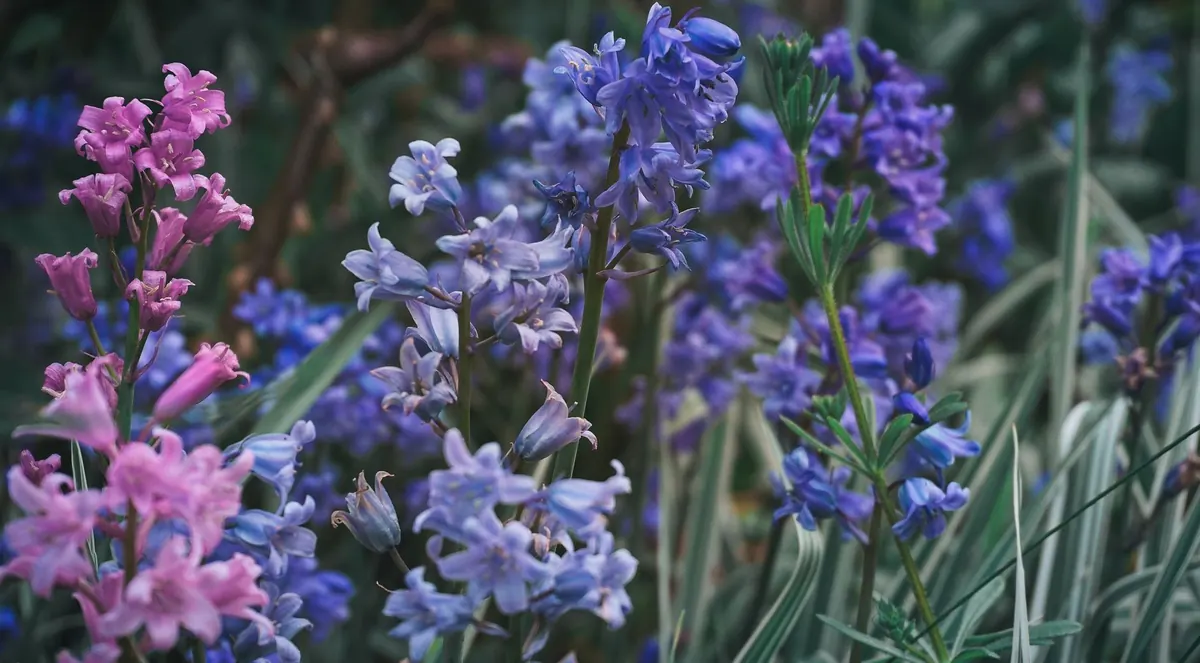
Get level with a flower and look at it from the side. A native bluebell is narrow and tubular, with the petals fused for most of their length. The tube is parallel-sided, and the six tips curl back tightly, as if someone rolled the edge of a skirt. The whole cluster droops, and the flowers hang mostly on one side of the stem, so the head nods over like a heavy candle.
A Spanish bluebell is an open bell. It is wider at the mouth, cone-like rather than tube-like, and the petal tips flare outwards instead of curling back. The flowers are arranged all the way round the stem and the plant holds its head up. Colour helps a little: natives are usually a deep violet-blue, Spanish ones a paler, brighter sky-blue, though both can throw white and pink forms.
An easy check: anthers and pollen
Inside the flower, the anthers carry the pollen. On a native bluebell they are cream or off-white, and the pollen is creamy too. On a Spanish bluebell the anthers are usually blue-violet and the pollen has a greenish-blue tinge. Check two or three flowers on a dry day, since rain and age wash the colour out.
Scent: The Ten-Second Test
Crouch down and sniff a flower head from a few inches away. A native bluebell is sweet, heavy and honeyish, and a warm afternoon in a good colony will carry the scent several metres. A Spanish bluebell has almost no fragrance at all, or a faint soapy something that is hard to name.
This is often the fastest way to settle an argument when both plants are in front of you. Treat it as a supporting clue rather than the final word, though. Cold, wet weather, the end of the season, and flowers that have been open for a fortnight will all mute the scent.
Leaves, Stems and Stance
Native bluebell leaves are narrow straps, roughly a finger-width or less, dark green and often with a slight sheen. They flop and arch and lie across one another, and they die back fairly early, leaving the wood bare by midsummer. The stems lean and nod. The whole plant looks loose and slightly untidy, which is part of its charm.
Spanish leaves are noticeably broader, often two or three fingers wide, paler and brighter green, and held more stiffly upright. The stems stay straight. The clump is denser and bigger overall, and the foliage hangs around longer into summer. If you are comparing two plants side by side, the Spanish one will look like the well-fed version.
Growth Habit and Where You Find Them
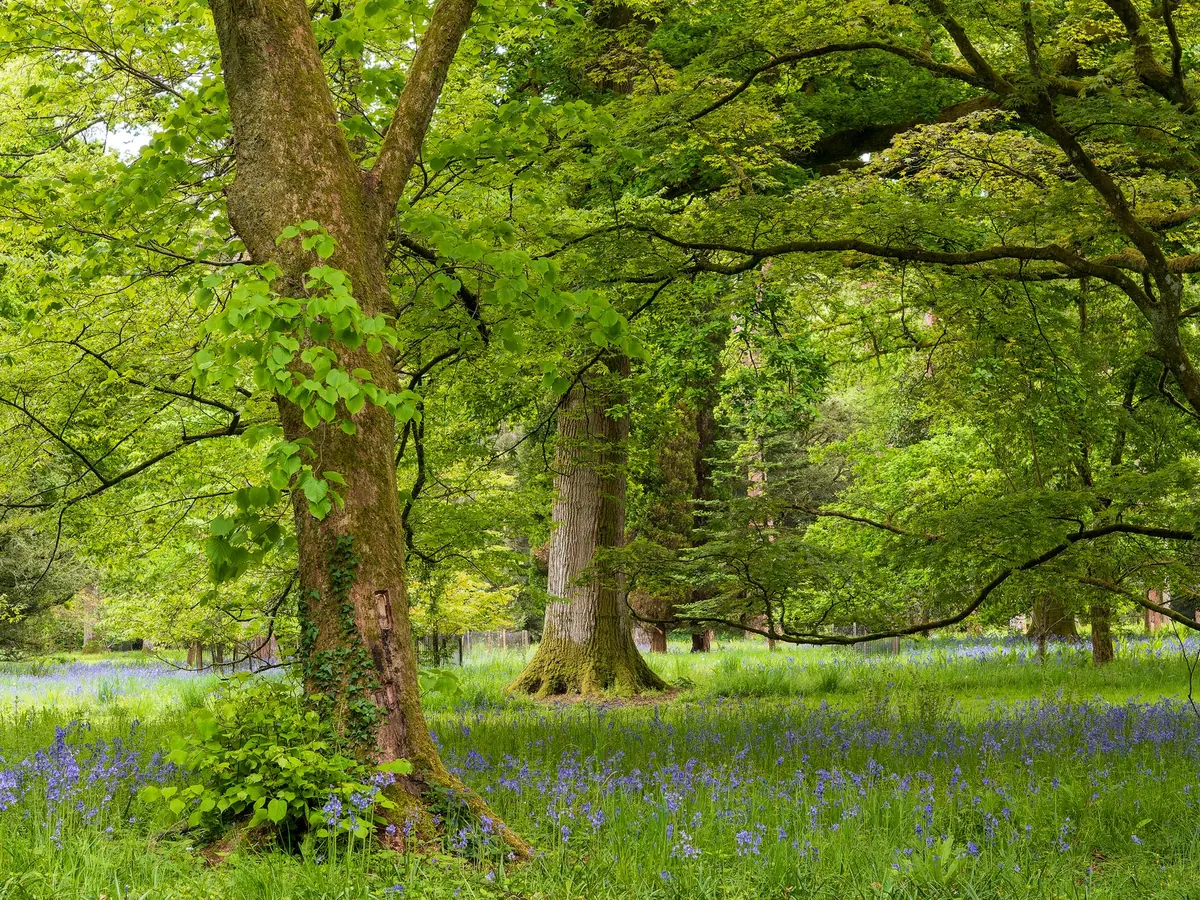
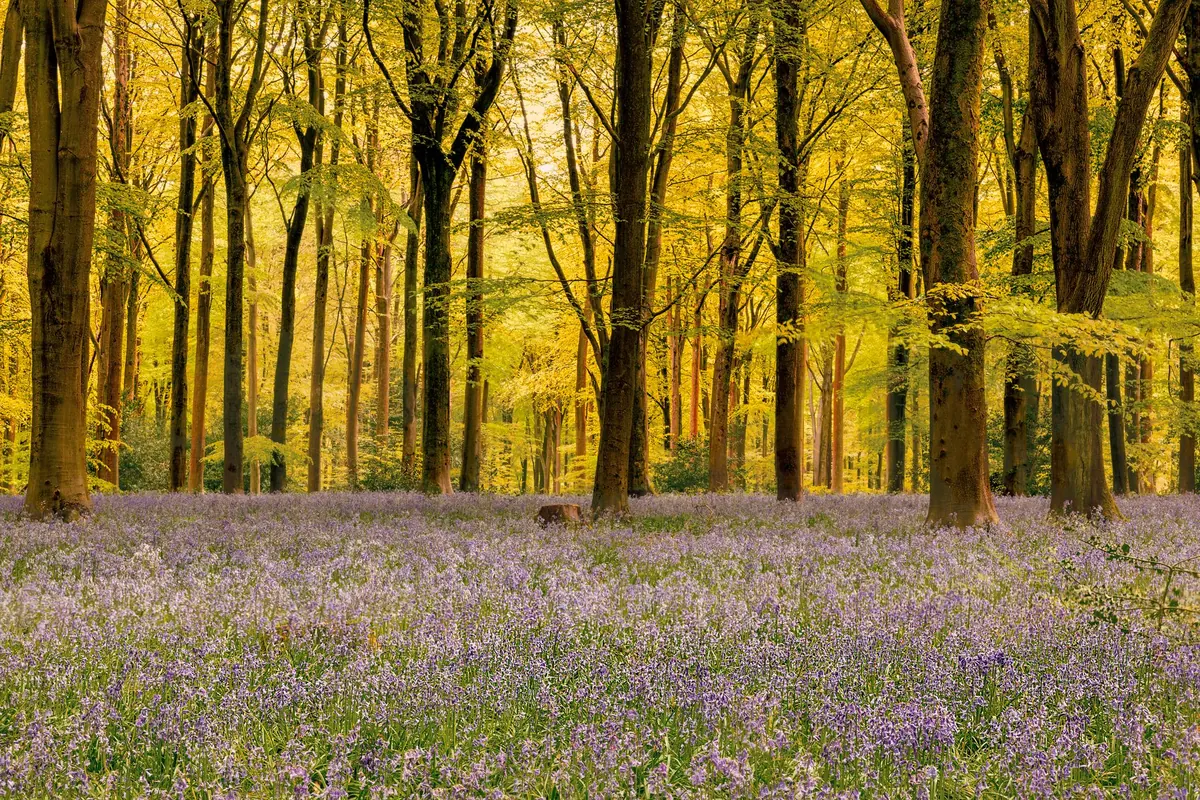
Native bluebells belong to old woodland, shady hedgerows and damp banks, especially on heavy soil. They spread mostly by seed and form broad, hazy drifts; the colonies in the north and west flower a little later than those in the south. Spanish bluebells turn up in gardens, allotments, churchyards, roadside verges, waste ground and the edges of parks. They bulk up fast by offsetting bulbs as well as seed, and they grow in orderly, upright clumps rather than soft drifts.
That said, you will often find them together, which brings us to the awkward middle ground.
The Hybrid Problem
Hybrid bluebells are intermediates, and that is exactly what makes them hard. You may find a flower with a partly curled tip, a faint scent, mid-width leaves and anthers that are only pale blue. Because hybrids are fertile, a colony can show the full range from native to Spanish, with every shade in between.
So judge the whole stand, not one flower. If most plants nod, smell sweet and hold narrow leaves, it is a native colony with some contamination. If most stand upright, smell of nothing and carry broad leaves, treat it as Spanish or hybrid.
A quick field checklist
- Flower from the side: parallel tube with tightly curled tips = native; open, flared bell = Spanish.
- Arrangement: flowers on one side of a drooping stem = native; flowers all round an upright stem = Spanish.
- Scent: sweet and heavy = native; faint or absent = Spanish.
- Anthers: cream with creamy pollen = native; blue-violet with greenish pollen = Spanish.
- Leaves: narrow, floppy, dark green = native; broad, upright, bright green = Spanish.
- Mixed colony: assume hybrid and look at the majority.
What to Do Once You Have Identified Them
If you want native bluebells in the garden, buy bulbs sold explicitly as Hyacinthoides non-scripta from a reputable grower, and plant them in autumn in shade, ideally under deciduous trees. Do not lift plants from the wild. In the UK, native bluebells are protected, and digging them up without permission is not something to risk; check the rules where you live before you disturb anything.
If Spanish bluebells are already in your garden, dig the bulbs out with a fork, going deeper than you think you need to, and repeat over two or three springs because small bulbs and seedlings always escape the first attempt. Deadhead before the seed sets. Never put the bulbs, seed heads or spent foliage on the compost heap, and never tip a bag of them into a wood, verge or field. Bag them and bin them.
In a wild place, leave the spade at home. Photograph anything that looks off, from the side and from above, with a leaf next to your finger for scale, and send the pictures to your local wildlife trust or county recorder. They will know whether the colony is worth recording.
Learn two or three of these clues well and the wood starts to sort itself out. The nodding, honey-scented drifts are the ones worth keeping.